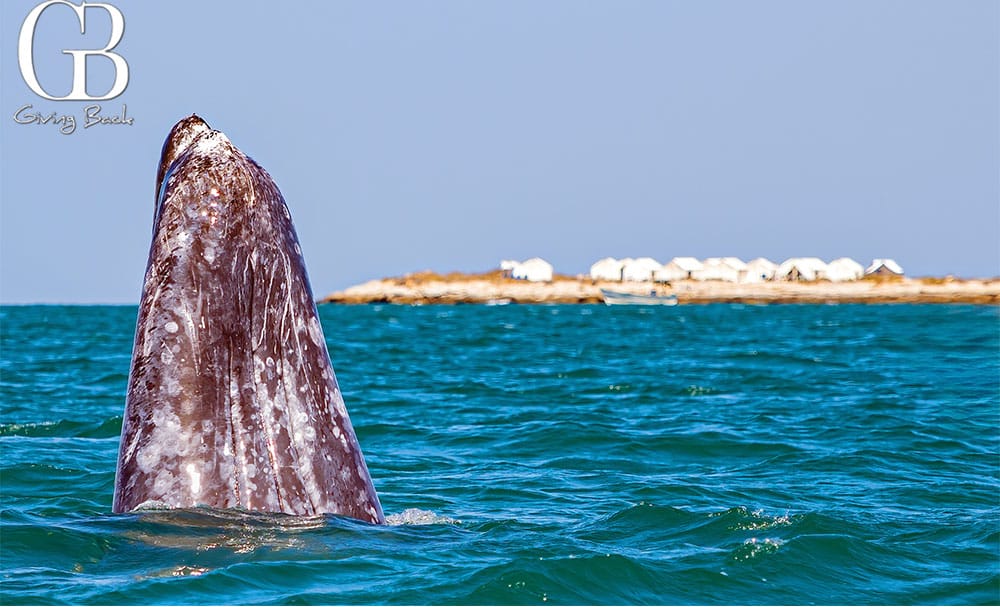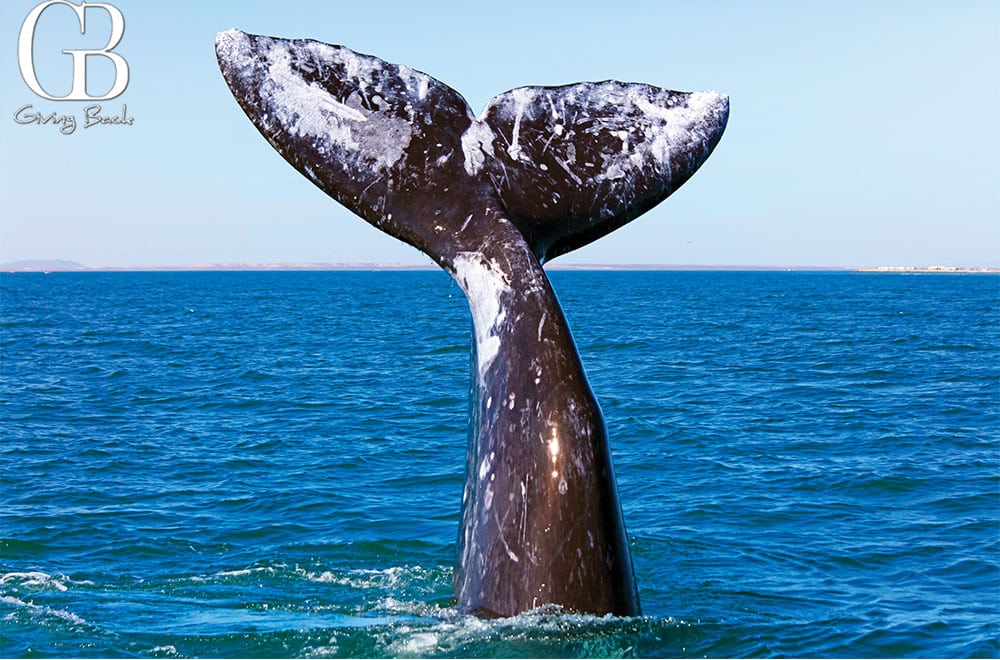


Each winter, thousands of gray whales complete one of the longest mammal migrations on Earth: 12,000 miles from Alaska’s icy seas to the warm, shallow lagoons of Baja California. At San Ignacio Lagoon, mothers give birth, calves learn to swim, and massive adults breach, spy-hop, and mate against a backdrop of stunning desert mountains, giant sand dunes and blazing sunsets.

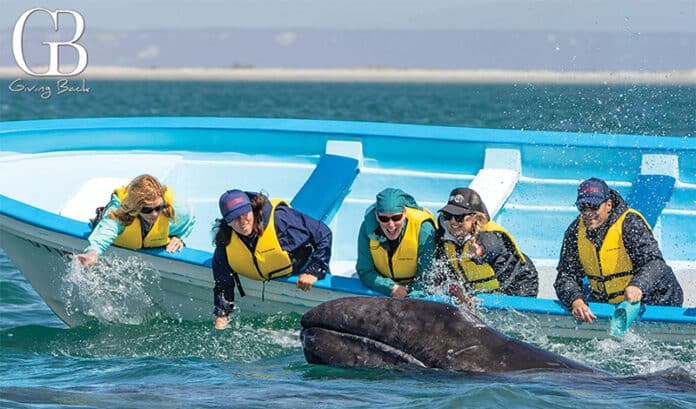
For reasons scientists still do not fully understand, these leviathans sometimes seek human contact, gliding toward small panga boats, even nudging their calves forward as if to introduce them. It is an encounter that feels almost miraculous- especially considering these same whales were hunted nearly to extinction a century ago.
A Victory for Conservation
In 2000, this sanctuary nearly vanished. A Japanese conglomerate planned to build the world’s largest industrial salt plant on the lagoon’s edge, threatening to poison its pristine waters. WILDCOAST, a conservation nonprofit co-founded by Serge Dedina, Ph,D., helped lead the fight that stopped the project and secured 483 miles of protected coastline around Baja’s gray whale lagoons.
That victory preserved one of the last undeveloped gray whale nurseries on Earth. But today, a far bigger threat looms.
Decline in the Age of Climate Change
Once hailed as a comeback story, the eastern North Pacific gray whale population has crashed from 27,000 a decade ago to just 13,000 today. Between 2019 and 2023, the National Oceanic and Atmospheric Administration declared an Unusual Mortality Event after hundreds of whales washed ashore, many starving to death.
Scientists link the decline to warming seas and ecological upheaval in the whales’ Arctic feeding grounds. Without enough food during the summer, gray whales lack the energy to survive their marathon migration – or to reproduce successfully. Sadly, calf production has plummeted since 2019. Their decline signals the dramatic impact climate change is having on marine ecosystems. According to Dedina, “As a result of climate change, gray whales are literally canaries in the dramatically changing ocean coal mine. We cannot afford to let these wondrous symbols of California and Baja’s coastal waters vanish before our eyes. We must do everything we can to protect these magnificent whales right now and far into the future.”
A Front-Row Seat to Conservation
Despite the challenges, WILDCOAST has helped to conserve 38 million acres of coastal and marine ecosystems across California and Mexico. To connect people directly with this work, WILDCOAST organization partners with Baja Discovery to offer a five-day eco-adventure at San Ignacio Lagoon.
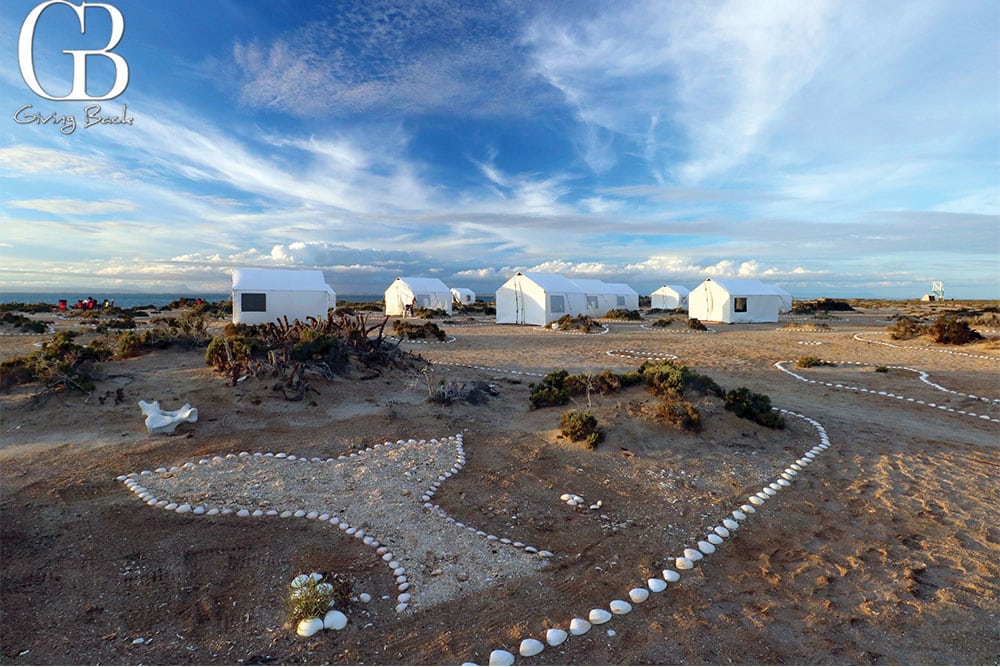
Guests stay in a low-impact, safari-style camp on the lagoon’s edge, exploring by day and gathering under starry skies at night. Twice-daily boat excursions led by local captains bring visitors face-to-face with the whales – on the animals’ terms. Beyond whale watching, travelers kayak through mangrove forests, walk along pristine beaches, and hear from scientists about the urgent fight to protect these waters.
It is more than a trip. It is a call to action – an invitation to witness the wonder of gray whales and join the movement to save them.
For information on WILDCOAST’s February 18–22, 2026 Gray Whale Adventure with Baja Discovery, contact Ann Wycoff at (619) 423-8665.
www.wildcoast.org