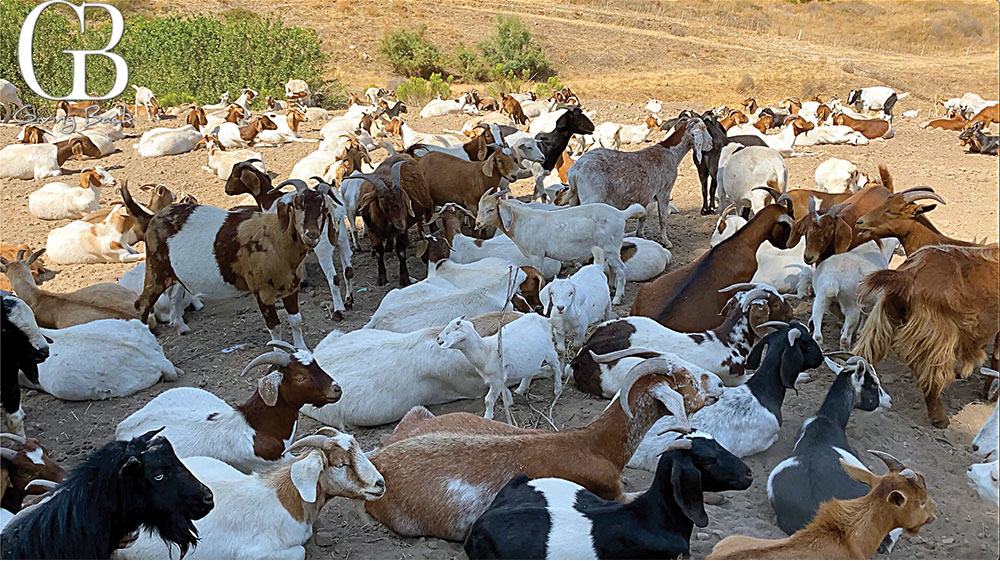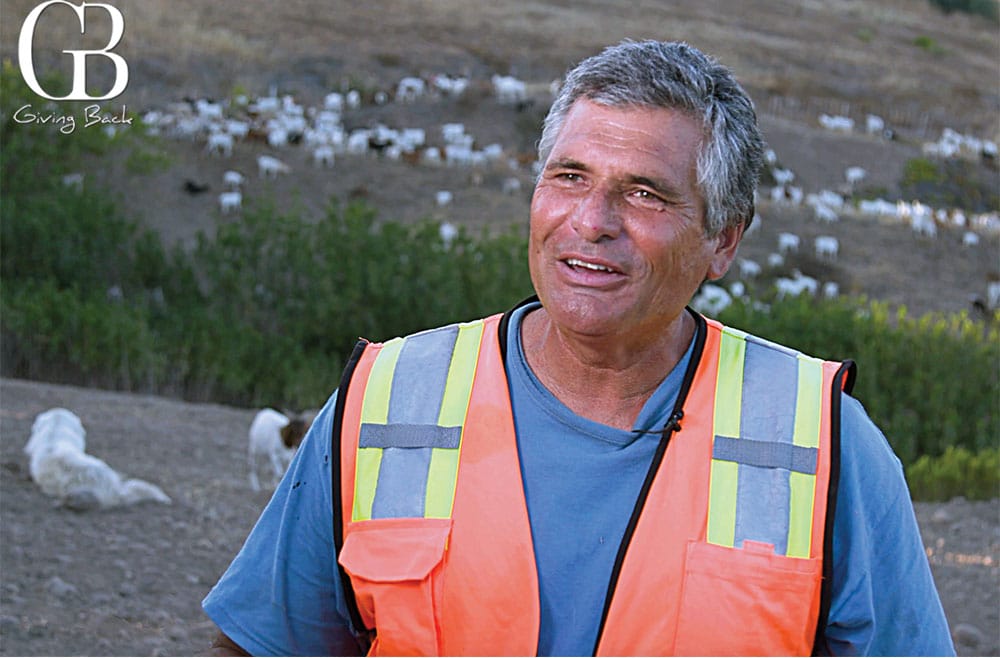


Johnny Gonzales did not have to raise his voice. In fact, he did not have say anything at all. Just a little whistle and instantly about 300 of his colleagues knew it was lunch time. Or maybe it was dinner. The distinctions are not really clear when all you do is eat. “Nine times a day,” Johnny says. “And at night, if it suits them, they will get up and chow down for another two or three hours.” It is what you do when you are a brush-clearing goat.

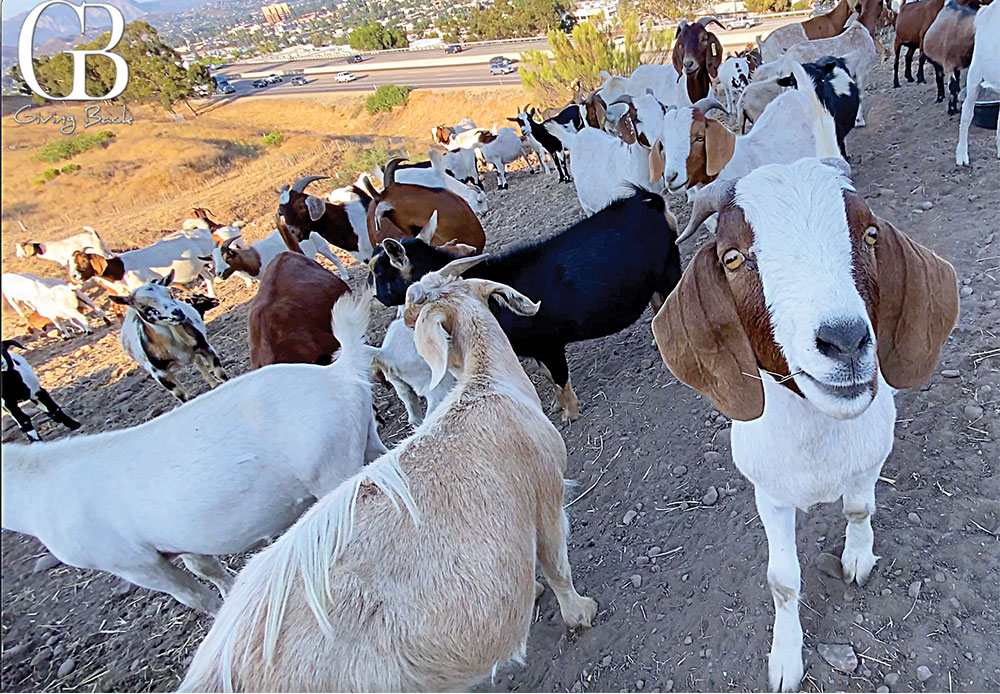
On this day, Johnny’s herd was at work on a hillside overlooking Interstate 8 in El Cajon, and nothing about traffic noise or gawking neighborhood kids (the human kind) could distract them from the menu. “They are not country goats,” he says. “They are not meant to be in Switzerland or Colorado.” They travel around San Diego County and beyond, under contract with government agencies, municipalities, and private and corporate landowners, and being goats, they chew everything they can reach right down to the dirt. It is an extremely thorough and ecologically sound form of fire prevention. Johnny and his crew of goats, including two goat herders and a couple watchdogs, show up for a few days – and with remarkable efficiency, flash fuels that might otherwise spread fire along the ground are munched away. So are what is called “ladder fuels” that, in a brush fire, spread flames to taller vegetation. The goats are really good at it.
As for Johnny, he will tell you, being a goat herder is a full-time and all-encompassing commitment. The goats are scheduled year-round. “There are no holidays. They do not get parked in the garage. They do not go away.” Generations of goats, born into this life, travel with the herd for years. On the day we spoke with him, they had all just come from a gig in Carlsbad and another in Chula Vista.
He can list dozens of reasons why goats are preferable to gasoline-powered machinery growling over the hillside or herbicides poisoning it. And Johnny knows that is an important message. He takes the time to talk with those who are curious about the goats, allowing visiting children to name them Spot or Dolly or Creme Puff. “And when they name a goat, you better doggone remember the name of that goat!” he says.
In the end, it is hard not to find a little wistful charm in what can be an almost pasture-like scene. It is a rural touch along a crowded freeway; a bit of nature on suburban land that has not seen such a thing in a century, if ever; and for city folks, something quite unexpected About San Diego.