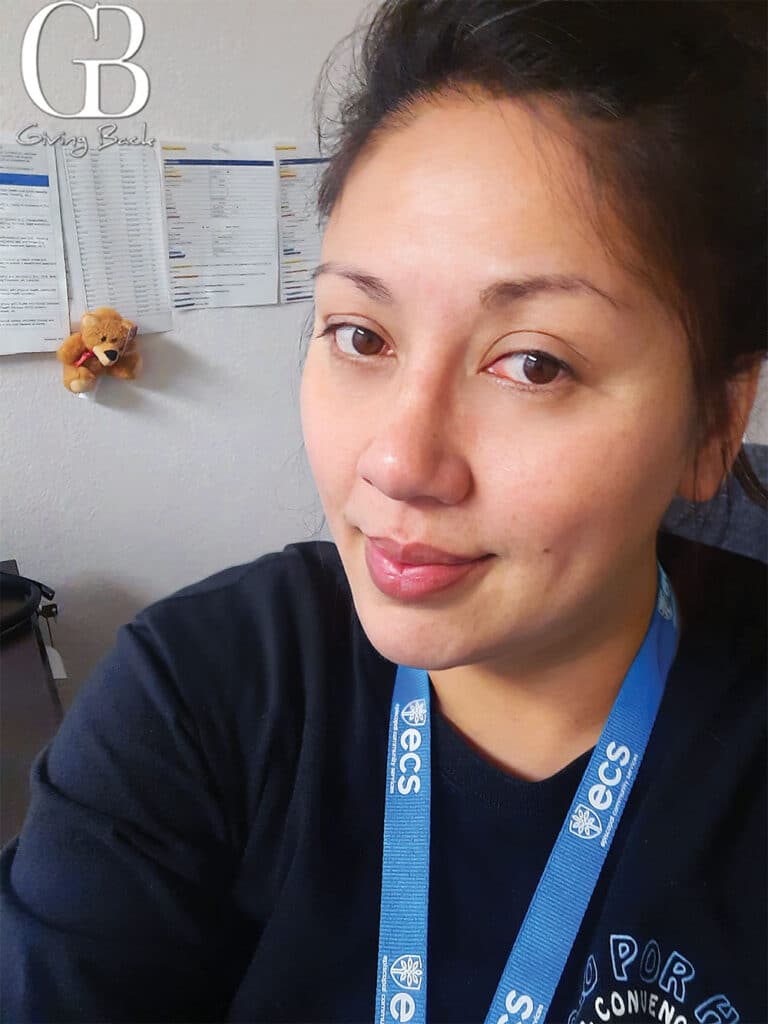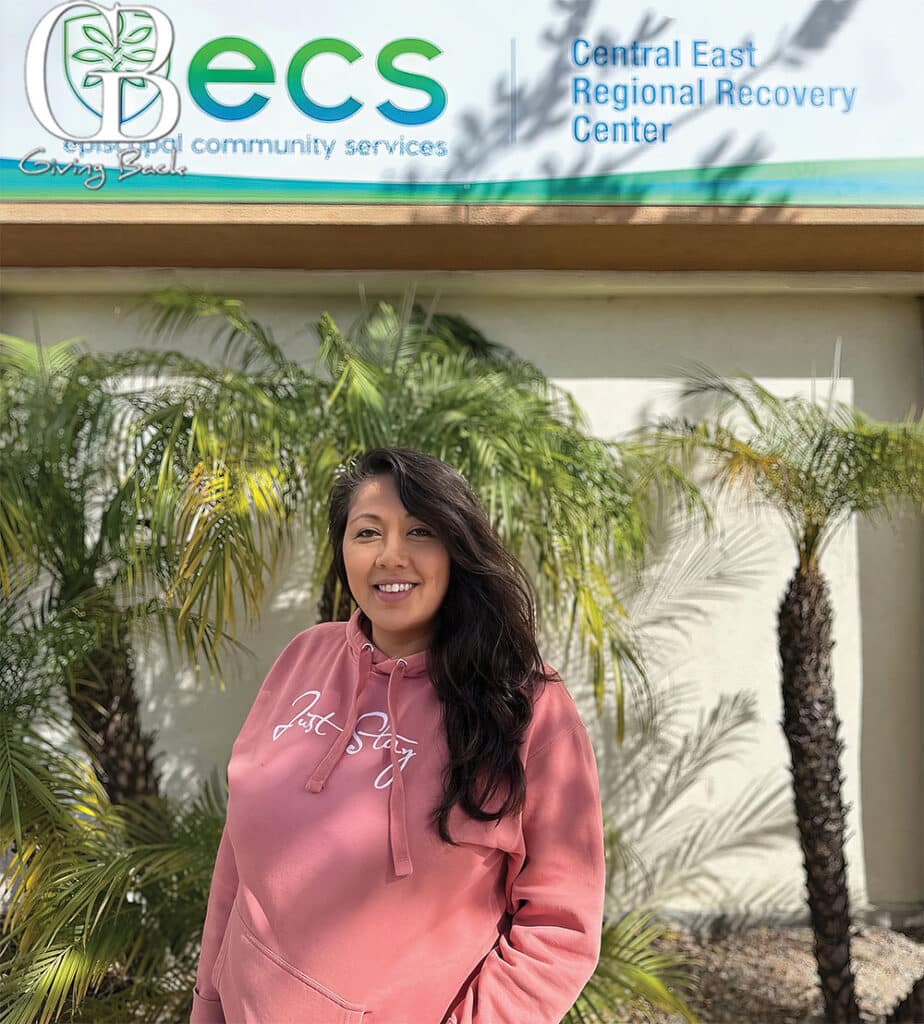


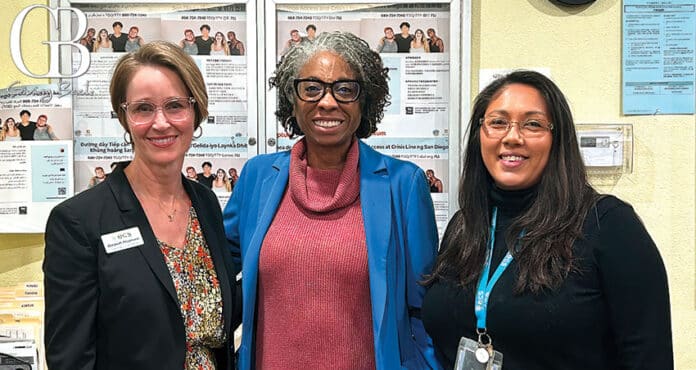
Stephanie, a case manager at ECS’ Central East Regional Recovery Center (CERRC), pours her heart into her job. Each client is met with compassion and care. Her motivation? Stephanie was once in their shoes, dealing with a substance use disorder (SUD).

For years, Stephanie battled SUD. Her childhood in Minnesota was set in a broken home; her father battled alcoholism, she was molested by a relative, and her parents fought intensely before separating. “It was really unstable,” Stephanie shared with GB Magazine. She and her sisters moved often, sometimes staying in foster care or with friends. In ninth grade, while living with a friend, she tried drugs for the first time.
Stephanie used drugs to cope with childhood events. “For a long time, I thought that was how everyone’s family was,” she said. “I am about to turn 40 and I can still remember this stuff.” When drugs were no longer enough to cope, Stephanie ran to San Diego. “I was always running… Every time there was a problem, I would either run away or run to drugs,” Stephanie said.
She was also in a physically abusive relationship. “I either need to be a nun, or I need to have treatment,” Stephanie half-joked. She settled on the treatment option. “I did not think I was going to get clean, but God gave me the gift of desperation.” To ensure she did not resort to her old “running” habit, she gave up her car and residence. But finding the right support was not easy. Stephanie tried several SUD programs, but many lacked the support she needed. Others had too much drug use and crime in proximity. Thankfully, she was eventually referred to CERRC.
There, Stephanie received the guidance she needed. She learned about healthy relationships, co-dependence, and toxic behaviors. “Growing up, I did not have a lot of support from my parents. So, when I got here and I got advice that you would typically hear from your parent, it took me to a whole different level,” Stephanie said.
Not only did she achieve sobriety, the stability and guidance allowed her to leave her abusive relationship, obtain housing, get a job, buy a car, and start a career. “They gave me a foundation of ‘this is what recovery looks like,’” she stated proudly.
Eventually, Stephanie became a drug and alcohol counselor. As someone who recovered from an SUD, Stephanie often goes above and beyond her job duties. Her office is welcoming, with free clothes, food, toiletries, and books for anyone who needs them. “How are you supposed to recover if you do not have the basic things,” she observed. “I want to uplift them and say, ‘hey, you are worth it.’
To Stephanie, ECS and CERRC stand out in her experience as a client and as an employee. “I am really grateful that I work here because I feel like we get to do God’s work.”
ECS CERRC provides outpatient treatment for adults living with substance use disorders. To donate hygiene kits for clients on their path to recovery or to see how you can support ECS, contact Tim Whipple, Development Director, at (619) 609-1182.
www.ecscalifornia.org