

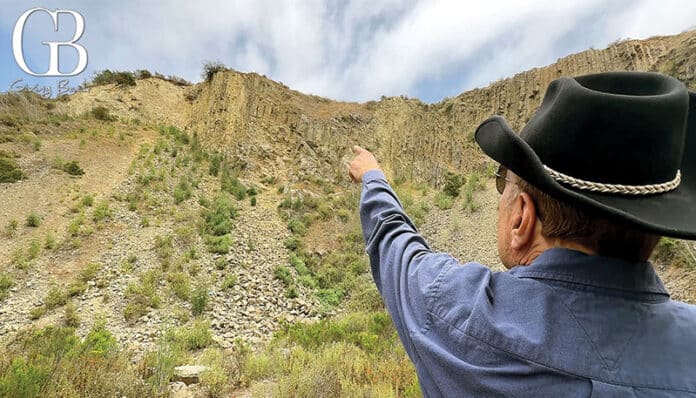
If Pat Abbott had the ability to go back in time, I am pretty sure he would venture across the brushy hills of coastal North San Diego County searching the sky for smoke and ash. Dr. Abbott is a geologist who is particularly fascinated with a little volcano that blew its top roughly 40-million years ago within what is now the city limits of Carlsbad. “It is the kind of thing that people living in the neighborhood would have been able to move away from,” he says. “It would not have killed or harmed anybody.” Of course, there was nobody around back then to note the slight inconvenience before it stopped forever. “It is now extinct,” Pat says. “It will never erupt again.”

Known as “Cerro de Calavera,” the name translates from Spanish to “Skull Hill,” and even though it is un volcán extinto these days, evidence of its prehistoric dramatics can still be found in Carlsbad if you know where to look.
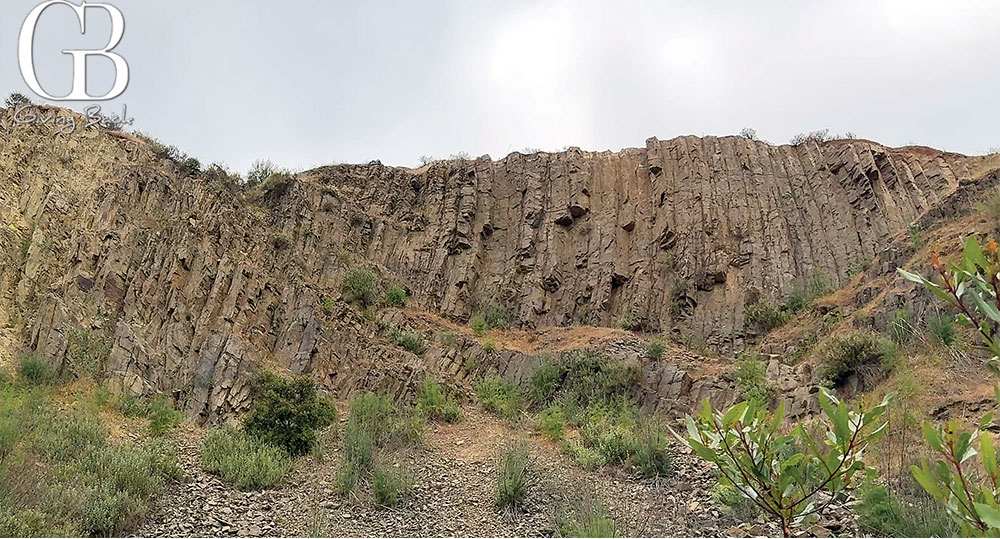
Off Tamarack Avenue just north of Strata Drive is Lake Calavera Trail Head, where an easy walk takes you across a small dam and presents a view of the volcano that might not be what you imagine. Over countless millennia, the volcano’s once classic cone shape eroded away until one whole side is now exposed. “Now you can see inside the throat of it,” Pat says. Indeed, as you walk the trail toward the volcano, glance up and you can clearly see hexagonal vertical columns formed when the magma was cooling. For Pat Abbott, it is like a fingerprint from which a lot can be gleaned. “Some gas burst through the surface, blowing stuff into the air for a while. It took place at a maximum of a few years, and it is a one-and-done.” Nothing about the nearby geology suggests it was part of a pattern, and all these years later, most San Diegans are surprised to learn this relic of the Eocene Epoch even exists. But Cerro de Calavera was in its day a small spectacle, blasting out smoke and rock, making its presence seen and heard despite being one of the smallest volcanos in North America.
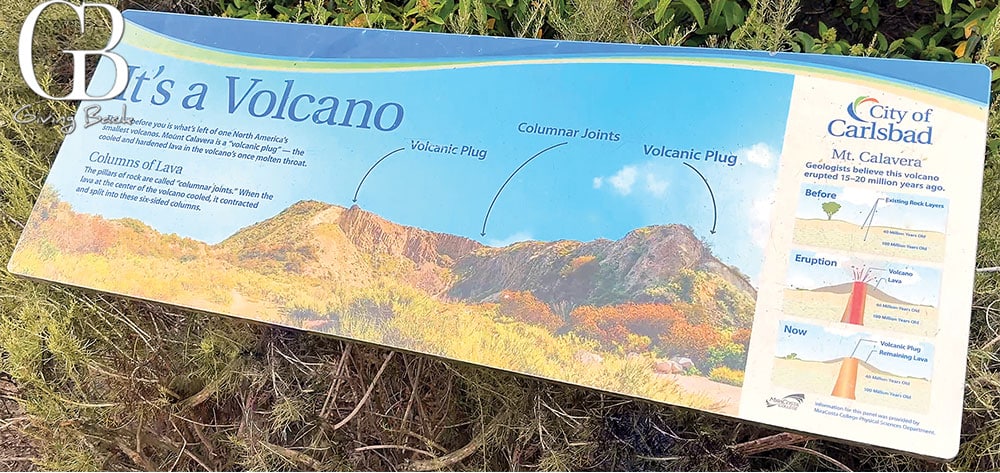
Today the trail is dotted with informative signs, greeting passersby with bits of data about the planets above and the nearby dam designed to impound rainfall. One sign aligns perfectly with a view of the mountain, proclaiming “It’s a Volcano.” Quiet now, its face worn by age, its blast of glory in smoke and ash was tiny and brief. Still, Cerro de Calavera is our own. It represents a remarkable and largely unknown part of our geologic past, and is well deserving of a visit to see some ancient history About San Diego.